Problem
Small and mid-size exterior contractors often estimate jobs in spreadsheets, notes, and memory. That creates pricing drift, slow turnaround, and avoidable margin leakage.
Audience
Primary users are builders and sales estimators quoting wood decks, fences, and covered porches.
Secondary users include owners and operations leads who need more predictable pricing and cleaner proposal workflows.
Leadership Objective
Build a quoting system that improves speed, pricing accuracy, and operational consistency without adding complexity for field-driven teams.
Approach
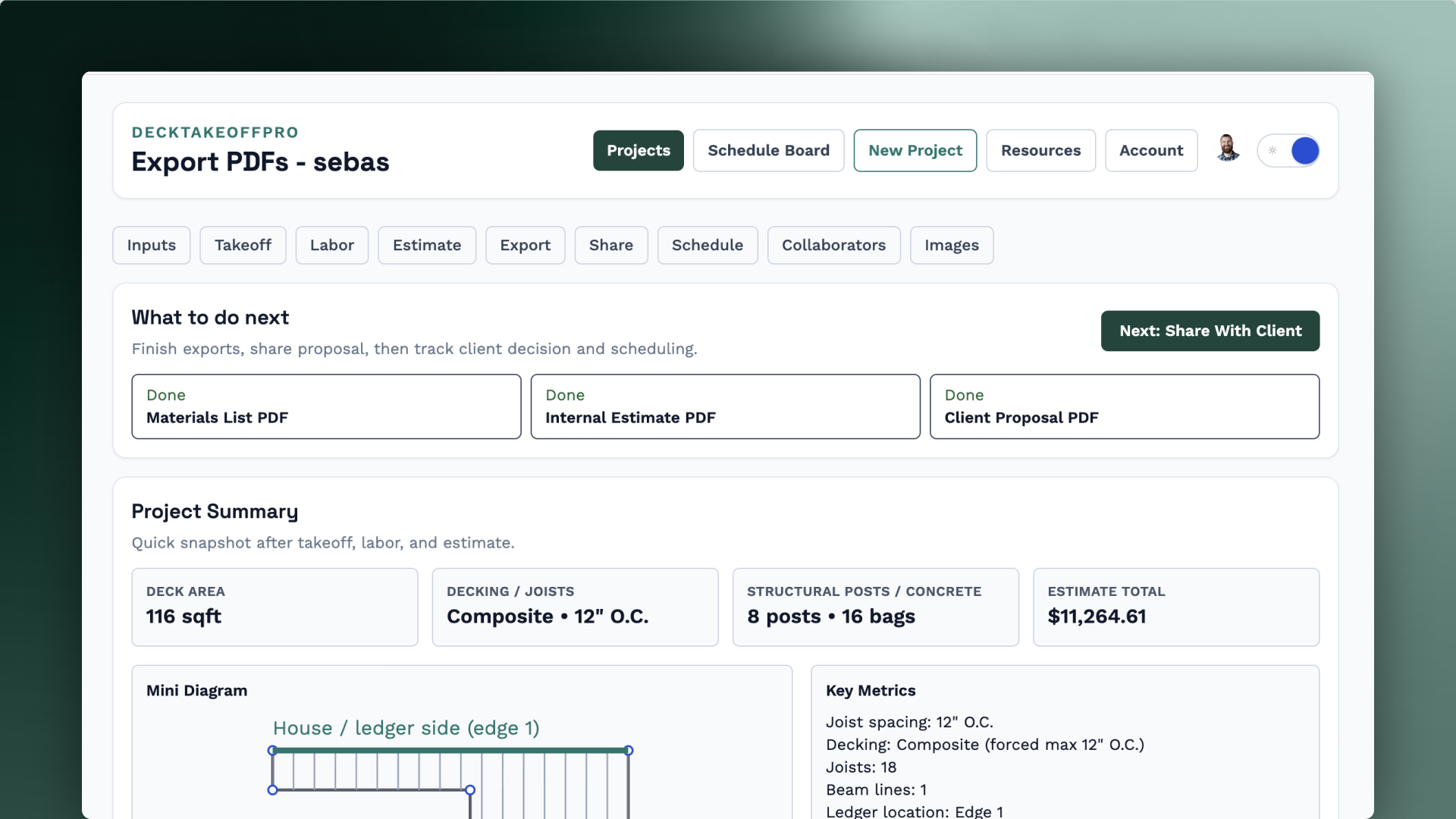
I designed Deck Ops as an estimating operating layer, not just a calculator.
The product strategy focuses on four practical outcomes:
- standardize takeoffs and scope assumptions across estimator experience levels
- encode material, labor, and complexity logic into reusable pricing rules
- generate polished client-facing proposals directly from estimate data
- surface margin and risk signals before quotes are sent
System
1) Scope + Measurement Layer
Captures project type, dimensions, site complexity, and option sets for decks, fences, and covered porches.
2) Cost Logic Layer
Applies configurable rules for materials, labor rates, waste factors, hardware, and complexity multipliers to produce consistent baseline estimates.
3) Proposal Generation Layer
Transforms estimate inputs into clean, client-ready proposals with line-item structure, optional upgrades, and clear inclusions/exclusions.
4) Margin + Decision Layer
Provides profitability checks, pricing guardrails, and revision tracking so teams can adjust quotes with confidence before delivery.
What I’m Proving
- Estimating speed and quote quality can improve simultaneously with the right workflow design.
- Rule-based pricing reduces variance and protects margins across different estimator profiles.
- Converting estimate data directly into proposals reduces handoff friction and shortens sales cycles.
Current Status
Prototype. Core estimate architecture and proposal flow are defined; current phase focuses on validating pricing rules and usability with contractor test cases.
Next Milestones
- Add regional material/labor presets and template libraries.
- Expand option-package logic for upsell scenarios.
- Launch pilot reporting for quote-to-close rate and gross margin performance.